
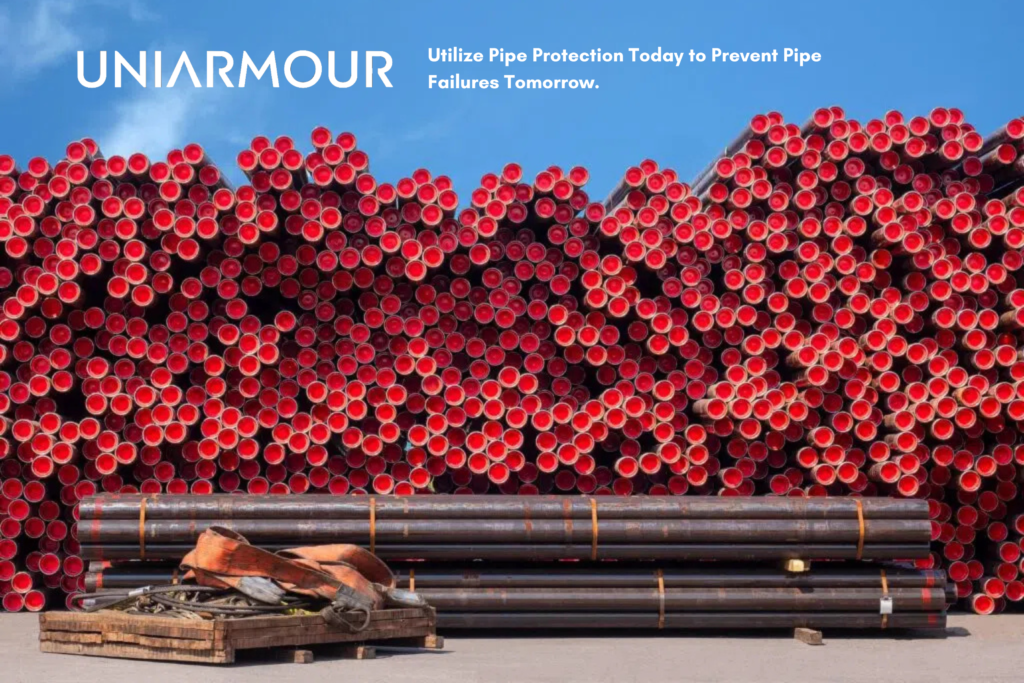
In the oil industry pipe is an asset. Without pipe in proper working order, projects can slow, stop, or be canceled altogether. This can cost a company time, money, equipment, and skilled labor. Unfortunately, pipe failure cannot always be avoided. Yet, knowing the most common causes of pipe failure can help to prevent and avoid future problems.
Damage to pipe can happen in any number of ways. Some of it is obvious, and other signs of fatigue or damage may not be visible to the naked eye. As such, knowing the most common causes of damage can aid in employing new techniques, processes, or products that will prevent as much damage as possible.
Twist-off: Pipe damage or failure is often linked to pipe twist off. This damage occurs from shearing stress linked to torque exceeding the pipe material’s ultimate shear stress. This type of damage does not occur in vertical well drilling as much as it does in directional and extended-reach drilling, where torques that exceed 80,000 pounds per foot are common.
Parting: Pipe parting failures are not uncommon and occur when induced tensile stress exceeds the pipe material’s ultimate shear stress. Damage or failure due to parting is often associated with pipe sticking an overpull is involved.
Collapse and Burst: While collapse and burst are rare, it does happen. Collapse and burst are most often associated with high mud weight and loss of circulation.
Fatigue: Pipe fatigue occurs in many ways and generally refers to microcracks in the pipe that often cannot be seen with the naked eye. This is a result of stress on any area of the pipe. Fatigue is often a combination of cyclic stresses and corrosion. Pipe corrosion occurs in the presence of O2, CO2, chlorides, and/or H2S. H2S.
There are a variety of protection products that will make storing, lifting, transporting, and handling safer, avoiding pipe failure:
Thread protectors are used to protect pipe from rough handling, harsh weather, transportation, and lengthy storage. Thread protectors simply screw onto the ends of the pipe to ensure that the threads are protected during pipe movement. Thread protectors can also help to avoid contamination from any foreign materials that may potentially enter the pipe. There is a wide variety of thread protectors to choose from, ensuring adequate protection for every type of pipe.
Bumper rings are important for storage or transportation. Bumper rings prevent both impact and environmental damages caused by multiple joints of pipe encountering one another during storage or transport. Using bumper rings will eliminate contact and prevent corrosion.
Pipe chocks are ideal for companies looking to store and transport their pipe securely, reducing the chance of damage by eliminating movement. Pipe chocks are devices that have been designed to be secured by nails to provide a stable resting position for the pipe. The pipe chocks are molded from a durable resin material with a nail slot design that makes using them as convenient to install and remove as they are protective.
Stabbing guides are an overlooked element in pipe protection but they can help to protect pipe during use. These guides are employed when making up a string of pipe and can protect face damage and connection failure. These guides are made from a steel core, and urethane outer shells have handles for guidance and are offered with varying types of closures to ensure they can be used with all pipes.
Lifting bails will also protect your pipe by safely lifting pipe, drill bits, and other equipment more easily and efficiently, while contributing to a safe work site, as well.
Each of these pipe protection elements will perform well on their own to protect individual threads, pipes, and people. When these elements are combined, protection is further improved, and job sites become more efficient, effective, and safer than ever before.